


Which car key do you have?
Car keys come in five main types: a plain metal key, a transponder (chip) key, a remote head key, a flip key and a smart key. If your car starts with a button instead of a turn of the key, you have a smart key. The type decides how a new key is made, so it is the first thing we ask when you call.
- 5 min read
- Open 24/7

By Wise Owl Locksmith, a mobile car locksmith in Freeport, FLUpdated
Look at the head, then at how the car starts
You can usually tell the type in a few seconds. Look at the plastic head of the key: is there one, does it have buttons, does the blade fold away? Then think about how the car starts: a turn of the key, or a button on the dash.
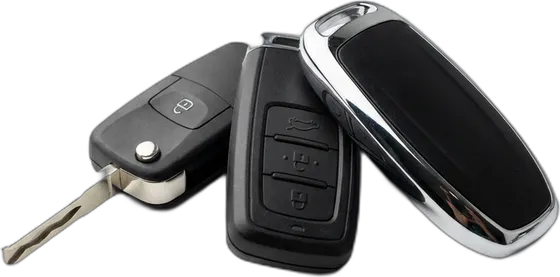
The five types, one by one
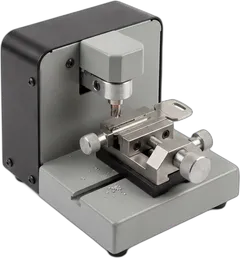
Plain metal key
Also called a mechanical key
- How to tell
- All metal, or a thin plastic grip with no buttons. Common on cars built before the late 1990s.
- How it works
- There is no chip, so the car only checks that the cuts fit the lock. Any key cut to the right pattern turns the ignition and starts the engine.
- What a new one takes
- Cut from the key code or copied from another key. No programming needed.
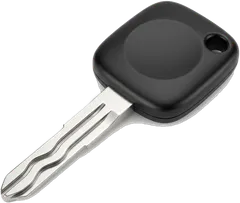
Transponder key
Also called a chip key
- How to tell
- A thick plastic head with no buttons, on most cars built since the late 1990s. Some have a wavy groove down the middle of the blade (a laser-cut key) instead of notches on the edge.
- How it works
- A small chip in the head sends a code to the car's immobilizer. If the car doesn't know the code, the engine won't start, even when the key turns.
- What a new one takes
- Cut to fit the locks, then programmed to the car. A cut-only copy opens the doors but won't start the engine.
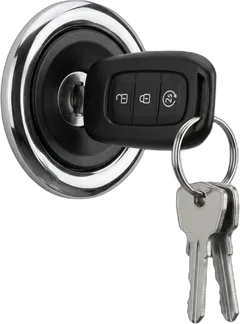
Remote head key
Older cars often have a chip key with a separate remote on the ring instead
- How to tell
- Lock and unlock buttons on the same head as a fixed metal blade.
- How it works
- Two systems in one key: a remote for the doors and a chip for the engine. The buttons can work while the chip isn't recognized, and the other way round.
- What a new one takes
- Cut, then both the remote and the chip programmed to the car.
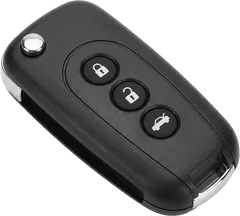
Flip key
Also called a switchblade key
- How to tell
- The blade folds into the fob and springs out when you press a button.
- How it works
- Inside, it works like a remote head key: a chip for the engine and a remote for the doors. The hinge and spring are the parts that wear out.
- What a new one takes
- A new key is cut and programmed. If only the shell or hinge broke, the electronics can often move into a new case.
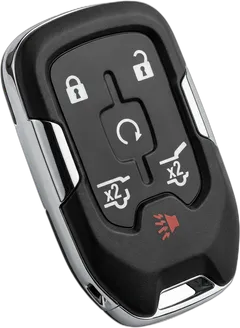
Smart key
Also called a proximity key, intelligent key or keyless entry key
- How to tell
- No blade sticking out. It can stay in your pocket or bag: the doors unlock when you touch the handle, and the car starts with a button.
- How it works
- The car senses the key nearby by radio. A metal blade hidden inside opens the driver's door if the battery dies.
- What a new one takes
- Programmed to the car's immobilizer and keyless system, plus the hidden blade cut to your lock.
What about push-to-start?
Push-to-start is how the car starts, not a separate kind of key. Most cars with a start button use a smart key: the car checks that the key is inside before it lets the engine run. So when someone says they lost their push-to-start key, they mean the smart key.
If the dash says the key isn't detected, a weak smart key battery is the most common cause. Many cars still start if you hold the key against the start button or put it in a marked spot on the console; the owner's manual shows where. Our guide to a key fob that isn't working has more.
Still not sure? Check these clues
- The year: most cars built since the late 1990s have a chip in the key.
- The head: buttons mean a remote, and a fold-out blade means a flip key.
- The start: a button on the dash means a smart key.
- The owner's manual: the keys section names the type and shows how the hidden blade comes out.
Why the type matters when you call
The type decides what a new key takes: cutting only, cutting and programming, or programming a smart key to the car. Together with the year, make and model, and whether you still have a working key, it is most of what sets the price.
If you are not sure what you have, describe it on the phone or text us a photo, and we'll tell you. We quote every key before we drive out, and our prices page explains what changes the price.
Questions people ask
How do I know if my car key has a chip?
If the car was built since the late 1990s and the key has a thick plastic head, it most likely has a chip. A locksmith can read the key with a programmer to be sure.
Can a hardware store copy my car key?
A hardware store can cut a plain metal key. Most car keys also have a chip that has to be programmed to the car, and a cut-only copy won't start the engine.
What is the difference between a key fob and a smart key?
A key fob locks and unlocks the doors when you press a button, and the car still starts with a key. A smart key is sensed by the car on its own, so the doors unlock at a touch and the car starts with a button.
What is the small key hidden inside my smart key?
It is an emergency blade. It opens the driver's door if the smart key battery dies. On most smart keys it slides out when you press a small release on the fob.
Does the type of key change the price?
Yes. A plain metal key only needs cutting, while chip keys and smart keys also need programming. We quote the price on the phone once we know the car and the key.
Services that help


More guides


Not sure which key you have?
Call or text us a photo. We tell you what it is and what a new one costs before we drive out.